
管理人オススメコンテンツはこちら
「“情報収集”で動けなくなる人の致命的な勘違い|賢い人ほどハマる“情報過多”の罠」
〜前回のつづき〜
●効率的な情報収集を目指す人がよくハマってしまう5つの罠(つづき)
では実際にどうやって
情報収集すればいいのか?
ここからは
新しいことを始めるときに役立つ
本当に効率的な情報収集の方法を
5つのステップに分けて
お話していきます。
まず大前提として
覚えておいてほしいのはこの2つです。
・いきなり大量の情報を浴びる事
・正解を探し求める事
これらは
効率的な情報収集にはなりません。
●本当に効率的な情報収集の5ステップ
ステップ1:基本的な情報収集をする
まずは普通に情報を集めます。
新しいことを始める以上
さすがに情報ゼロの状態で
スタートするわけにはいきませんよね。
最低限の知識を得るための
情報収集は当然必要です。
ただしここでよく聞くのが
こんな声です。
「それをやっていると
いつまでも情報収集を
し続けちゃうんです…」
という人もいるわけですね。
このタイプの人におすすめなのは
最初から時間を決めておくことです。
たとえば
-
何時間まで
-
何日以内まで
といったように
情報収集に使う時間や期限を
あらかじめ具体的に決めておく。
これだけでも
ダラダラと集め続けてしまうのを
防げます。
ちなみに
副業でしっかり成果を出している友人は
副業を始める前の情報収集期間を
『1週間まで』と決めているそうです。
このように時間で区切るのは
とても効果的な方法です。
ステップ2:書き出して考える
頭の中だけで考えていると
どうしても思考が
ごちゃごちゃしがちです。
自分では整理できているつもりでも
実は全然整理できていない
ということも少なくありません。
特に
・影響が大きい判断
・迷いやすい選択
こういった場面では次のことを
紙に書き出して考えるのが
おすすめです。
・選択肢はいくつあるのか
・それぞれのメリット・デメリットは何か
実際に書いてみるだけで
思考が一気に整理されます。
もしここで
判断するための情報が足りないと感じたら
・5分
・15分
・30分
・1時間
といったように
時間を区切って情報を追加する。
材料が足りないときは
そのタイミングで追加で
情報収集すればいいんです。
ただし注意点があります。
書き出した紙を
完璧に仕上げるという事が
目的にならないようにすること。
ここも要注意です。
あくまで目的は
・考えること
・判断すること
です。
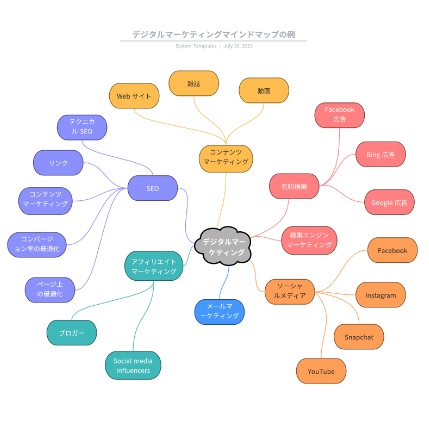
(出典:https://lucid.co/ja/templates/digital-marketing-mind-map)
思考整理の方法としては
マインドマップもとてもおすすめです。
ただしこちらも同じで
マップを完璧に仕上げるという事が
目的にならないように
その点だけは
注意してくださいね。
〜〜〜つづく〜〜〜
Special Thanks college president Ryo.
●おまけ
≪≪perplexityちゃんによる文章まとめ≫≫
効率的な情報収集を目指すうえで大切なのは、「大量の情報を浴びること」や「正解を探すこと」ではありません。本当に効率的な方法は、段階的に整理して行うことです。
まずステップ1は、基本的な情報収集をすること。新しいことを始める際には最低限の知識が必要ですが、終わりなく調べ続けないように「時間や期間を決めて行う」のがコツです。例えば、副業で成果を出す人は「情報収集は1週間まで」と決めています。
次にステップ2は、紙に書き出して考えること。頭の中だけで考えると混乱しがちなので、選択肢やメリット・デメリットを書いて整理します。情報が足りなければ、時間を区切って追加で調べれば十分です。注意すべきは、完璧なまとめを作ることが目的にならないようにすること。目的は「考える」「判断する」ことにあります。
マインドマップも有効ですが、こちらも同様に使い方が肝心です。
1.https://www.macroman.jp/media/collect-information
2.https://go.chatwork.com/ja/column/efficient/efficient-225.html
3.https://aconnect.stockmark.co.jp/coevo/information-gathering/
4.https://mirai-works.co.jp/business-pro/business-column/info-collection-tips/
5.https://benesse.jp/berd/special/manabucolumn/classmake19.html
≪≪Chat-GPTくんによる英訳≫≫
~Continued from the previous post ~
【Five Common Traps People Fall Into When Trying to Collect Information Efficiently (Continued)】
So, how should you actually collect information?
From here on, I’ll explain
a truly efficient way to gather information
that’s useful when starting something new,
broken down into five steps.
Before we begin, there are two important points
I want you to remember.
Bombarding yourself with a massive amount of information all at once
Constantly searching for the “right” answer
These do not lead to efficient information gathering.
—
【The 5 Steps to Truly Efficient Information Gathering】
Step 1: Gather Basic Information
First, simply gather information in a normal way.
When you start something new,
you obviously can’t begin with zero information.
Collecting information to gain at least
a basic level of knowledge is essential.
However, this is a concern I often hear:
> “If I do that,
> I end up collecting information forever…”
Some people fall into this pattern.
For those people, I strongly recommend
deciding on a time limit from the start.
For example:
A set number of hours
Or within a certain number of days
By clearly defining in advance
how much time you’ll spend on information gathering.
This alone can prevent you
from endlessly collecting information.
By the way, a friend of mine
who consistently gets solid results from side businesses
decides that their information-gathering period
before starting is limited to one week.
Setting time boundaries like this
is a very effective approach.
—
Step 2: Write Things Down and Think
When you only think inside your head,
your thoughts tend to become messy.
Even if you feel like everything is organized,
it often isn’t.
Especially when you’re facing:
Decisions with a big impact
Choices that are hard to make
In these situations, I recommend
writing the following things down on paper.
How many options are there?
What are the pros and cons of each option?
Just writing things out
can instantly clarify your thinking.
If, at this point, you feel
that you don’t have enough information to decide,
then add more information
by setting a clear time limit, such as:
5 minutes
15 minutes
30 minutes
1 hour
When the materials are insufficient,
you can simply gather more information at that time.
However, there is one important caution.
Do not make it your goal
to perfectly complete what you’ve written down.
This is crucial.
The real purpose is:
To think
To make a decision
(Source: [https://lucid.co/ja/templates/digital-marketing-mind-map](https://lucid.co/ja/templates/digital-marketing-mind-map))
As a method for organizing your thoughts,
mind maps are also highly recommended.
That said, just like before,
be careful not to make
“perfectly finishing the map” your goal.
Please keep that point in mind.
Special Thanks OpenAI and Perplexity AI, Inc